
The landscape of live entertainment has undergone a seismic shift over the last year. As we move deeper into 2026, the demand for immersive, multi-sensory experiences has pushed event technology to its limits. No longer is it enough to simply “light up” a stage; designers are now tasked with creating architectural environments using nothing but light. At the center of this revolution is the evolution of the moving head fixture—a tool that has transitioned from a luxury concert item to an essential component for weddings, corporate galas, and permanent installations.
For production houses and venue owners, staying ahead of these trends isn’t just about aesthetics; it’s about operational efficiency and ROI. This year, the industry is seeing a massive lean toward “hybrid” versatility and weather-resistant durability.
The Rise of the “All-in-One” Hybrid Fixture
In previous years, lighting designers had to choose between a “Beam,” a “Spot,” or a “Wash” fixture. Each had a specific job: beams for narrow, long-distance aerial effects; spots for sharp patterns and gobo projections; and washes for broad color coverage.
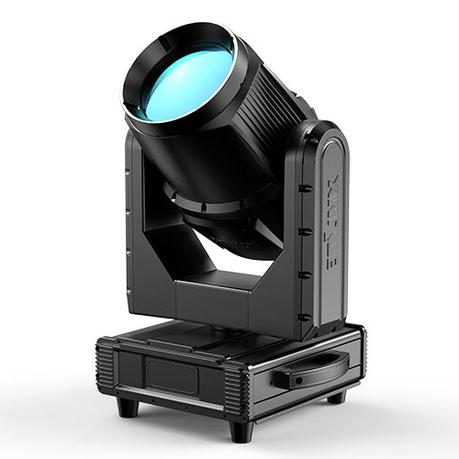
In 2026, the trend has shifted toward the “Triple Threat” hybrid. Modern stage moving head lights now integrate these three functions into a single chassis. This reduces the weight on the truss, lowers power consumption, and simplifies the programming process. For small-to-medium-sized rental companies, investing in hybrid technology means carrying less inventory while offering clients more creative flexibility.
Key Features Driving the Market
- CMY Color Mixing: Gone are the days of basic color wheels. Designers now demand smooth Cyan, Magenta, and Yellow mixing to create infinite pastel shades and deep saturates.
- LED vs. Laser Sources: While LED remains the standard for most wash and spot applications, Laser-source beams are becoming more affordable, offering unmatched brightness over several kilometers for outdoor festivals.
- Silent Operation: With the rise of televised corporate events and intimate theater productions, “silent mode” cooling systems have become a non-negotiable feature for high-end moving heads.
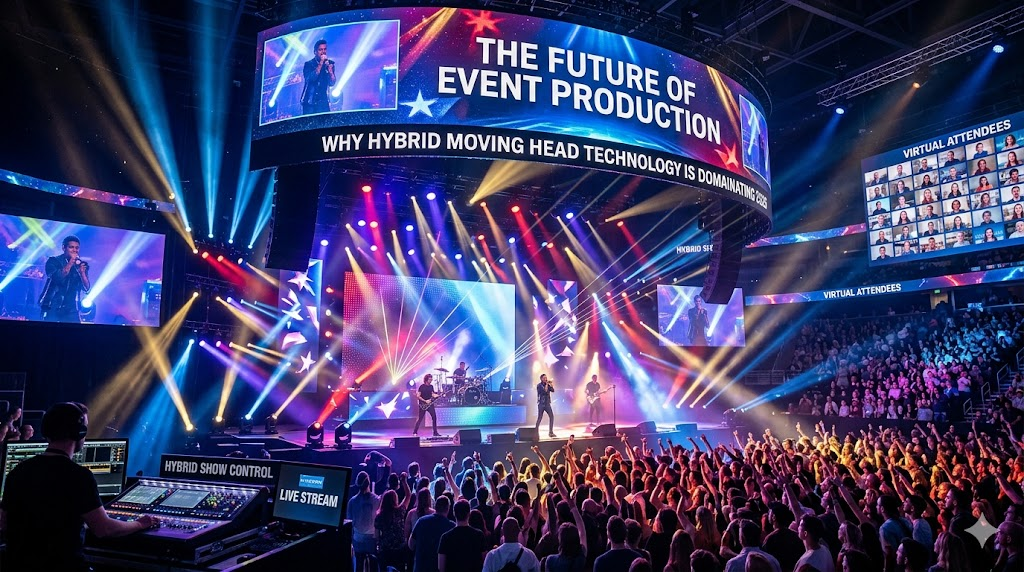
Caption: Advanced moving head arrays create immersive environments for modern concert tours.
Durability Meets Design: The IP65 Revolution
One of the most significant trends this year is the move toward waterproof, IP65-rated equipment. Traditionally, outdoor events required bulky “rain hats” or plastic domes to protect sensitive electronics. This looked unprofessional and muffled the light output.
The current manufacturing standard is shifting toward natively waterproof fixtures. By utilizing magnesium alloy housings and specialized gaskets, manufacturers are producing moving head lights that can withstand a torrential downpour without a drop in performance. This is particularly vital for the growing “destination event” market, where beach weddings and mountain-top festivals are increasingly popular.
The Importance of High-Authority Manufacturing
As the market becomes flooded with low-cost alternatives, savvy buyers are returning to specialized manufacturers who prioritize quality control and long-term support. In the world of professional lighting, “cheap” often becomes expensive when a fixture fails mid-show.
Companies like those found at usedlighting.cc specialize in the full lifecycle of stage lighting—from the precision engineering of the internal motors to the final sales and distribution. This vertical integration ensures that the stepper motors are calibrated for the “micro-stepping” required for smooth, slow pans, and that the cooling fans are rated for thousands of hours of continuous use.
Essential Categories for a Complete Rig
Beyond the moving head, a professional setup in 2026 requires a balanced ecosystem of fixtures:
- Follow Spots: Essential for highlighting key performers. Modern follow spots are shifting toward high-output LED engines, eliminating the heat and power-draw of traditional xenon lamps.
- Waterproof Par Lights: Used for “up-lighting” walls and foliage, these provide the foundational atmosphere for any event.
- Effect Lighting: Static blinders and strobes add the “punch” needed for high-energy moments in a performance.
SEO Strategy: Optimizing Your Lighting Content
For those publishing content in the event tech space, understanding the search intent of “Production Managers” versus “Venue Owners” is key. In 2026, Google’s algorithms prioritize expertise, authoritativeness, and trustworthiness (E-E-A-T).
When discussing stage moving head lights, it is vital to include technical specifications like Lux at 10 meters, CRI (Color Rendering Index), and DMX channel configurations. This data signals to search engines that the content is written by industry professionals rather than generalists. Furthermore, linking to a dedicated lighting equipment store provides the reader with a direct path to procurement, which improves the “user task completion” metric that modern SEO relies on.
The Economic Shift: New vs. Pre-Owned
The global supply chain has stabilized, but the “circular economy” in stage lighting is stronger than ever. Many venues are finding that high-quality, refurbished professional gear often outperforms brand-new “budget” gear.
Working with a reputable supplier allows production houses to scale their inventory quickly. Whether you are looking for the latest 2026 models with AI-tracking capabilities or reliable workhorse fixtures for a local club, the focus must remain on the optical quality. A light is only as good as its lens; high-quality glass optics ensure that the beam remains sharp and the colors remain vivid even at the edge of the projection.
Future-Proofing Your Investment
If you are looking to upgrade your lighting rig this year, consider the following checklist to ensure your gear remains relevant through 2030:
- Wireless DMX Integration: Most modern controllers are moving toward CRMX and other wireless protocols. Ensure your fixtures are “wireless-ready.”
- PowerCon In/Out: Daisy-chaining power is essential for clean cable management. Avoid fixtures that use standard “computer” power cables.
- Modular Construction: Choose fixtures where the LED engine or the mainboard can be easily swapped. This extends the life of the product significantly.
Frequently Asked Questions (FAQs)
2. Why should I choose IP65-rated stage lighting over standard fixtures?
An IP65 rating means the fixture is completely dust-tight and protected against low-pressure water jets from any direction.
If your business involves outdoor festivals, beach weddings, or events in dusty environments, IP65 fixtures are essential to prevent internal damage and reduce maintenance. Standard (IP20) fixtures require external “rain covers,” which can be cumbersome and visually distracting.
How does “CMY Color Mixing” benefit my production?
Unlike basic color wheels that only offer a few fixed colors, CMY (Cyan, Magenta, Yellow) mixing uses three graduated filters to create millions of color possibilities. This allows for smooth, seamless transitions and the ability to match specific branding or mood requirements exactly.
Can I project my own logo using these lights?
Yes! Most stage moving head lights in the “Spot” category allow for custom glass or metal gobos. You can have your company logo or event branding manufactured into a small disc, which the light then projects onto the floor, walls, or ceiling.
What is DMX512, and do I need it?
DMX512 is the standard language used to control stage equipment. While many fixtures have “Auto” or “Sound-Active” modes, DMX is required for professional shows where you want to synchronize movements, colors, and timing with music or a script.
Conclusion
The stage lighting industry is more vibrant than it has ever been. The combination of hybrid functionality, IP65 weatherproofing, and more accessible professional-grade manufacturing has opened doors for creators at every level.
Whether you are a touring LD (Lighting Designer) or a venue manager looking to breathe new life into your space, the current generation of stage moving head lights offers unprecedented creative power. By focusing on quality manufacturing and staying tuned to the latest technological trends, you can ensure that every event is not just seen, but remembered.
For more information on the latest in stage technology and to browse a comprehensive range of professional fixtures, visit www.usedlighting.cc. Exploring their catalog is a great first step toward understanding how these technical specifications translate into real-world performance.