
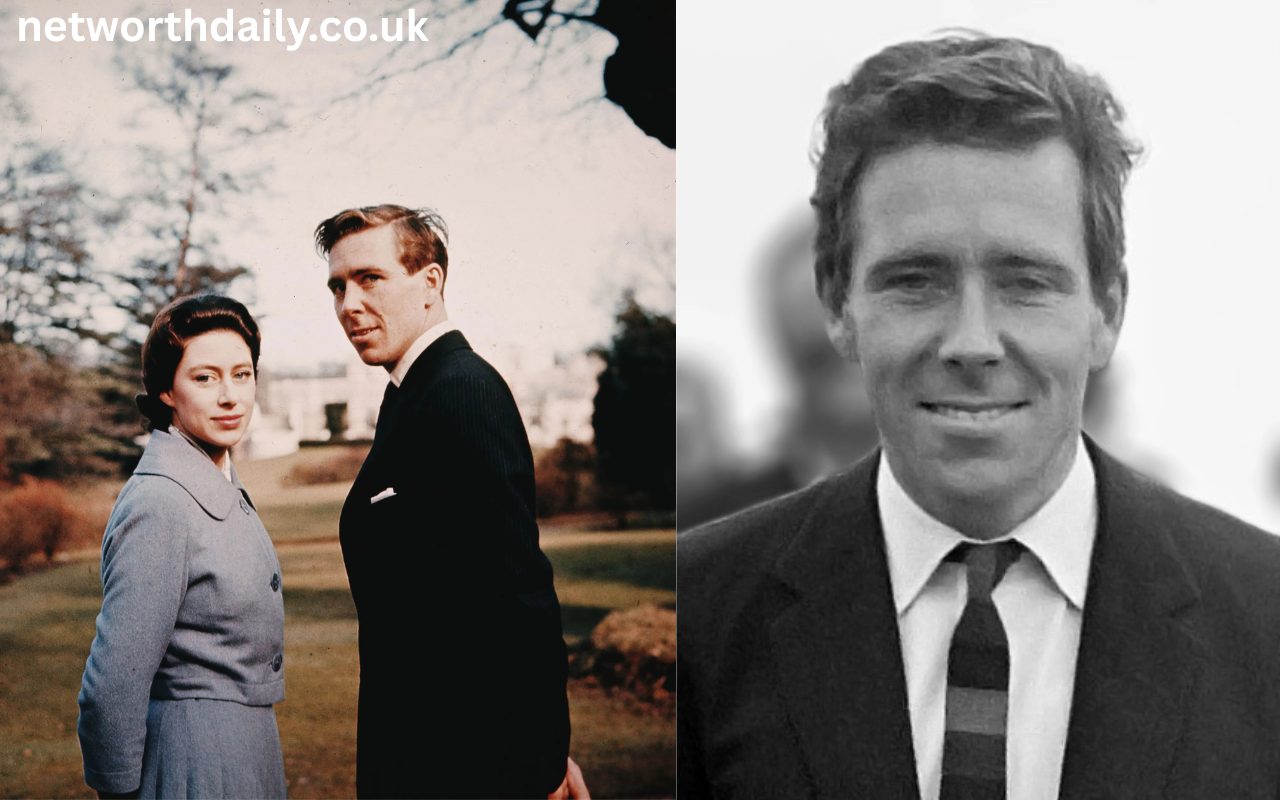
Lord Snowdon Antony Armstrong-Jones was born on 7 March 1930 in London into a well-connected but not aristocratic British family. His father, Ronald Armstrong-Jones, was a barrister, while his mother, Anne Messel, came from a creative background that exposed him early to art, design, and culture. Although he grew up in relative comfort, his childhood was marked by his parents’ separation, which shaped his independent and somewhat reserved personality. From a young age, he displayed a curiosity about people and an eye for visual detail that would later define his photography.
His education took him to Eton College, one of Britain’s most prestigious schools, where he struggled academically but developed strong interests in architecture and design. He later attended Jesus College, Cambridge, intending to study architecture. However, his academic path was interrupted when he contracted polio at the age of sixteen. The illness left him with a permanent limp, an experience that deeply affected his outlook on life and influenced his empathy toward people living with disabilities.
During his recovery from polio, his mother gave him a camera to occupy his time. That simple gesture changed the direction of his life. Photography became not just a hobby but a calling. It allowed him to observe human expression closely and interpret emotion through composition and light. This early encounter with the camera laid the foundation for what would become a distinguished career in portrait photography.
Building a Career in Photography
After leaving Cambridge without completing his degree, Armstrong-Jones decided to pursue photography professionally. He apprenticed under Baron, a well-known society photographer in London, where he learned the technical discipline and studio methods required for high-end portraiture. This training gave him access to elite circles and introduced him to the world of fashion, theatre, and magazine photography. His natural ability to connect with subjects quickly set him apart from other emerging photographers.
By the 1950s, he was receiving commissions from leading publications such as Vogue and The Sunday Times Magazine. His portraits were striking because they felt intimate yet elegant. He avoided stiff, traditional poses and instead encouraged relaxed expressions that revealed personality. This approach modernized British portrait photography at a time when formality dominated the field. His work began attracting celebrities, artists, and influential cultural figures who appreciated his fresh style.
His reputation grew steadily, and he became known as one of Britain’s most innovative photographers. He captured writers, actors, politicians, and members of high society with equal skill. The combination of technical precision and emotional depth in his images helped establish him as a leading figure in twentieth-century portrait photography.
Marriage to Princess Margaret and Royal Title
In 1960, Armstrong-Jones married Princess Margaret, the younger sister of Queen Elizabeth II. The wedding was a global media event and marked the first time in centuries that a commoner had married a close member of the British royal family. Following the marriage, he was granted the title Earl of Snowdon, becoming widely known as Lord Snowdon. This transformation from photographer to royal consort dramatically increased public interest in his life.
The marriage brought glamour and prestige but also intense media scrutiny. Lord Snowdon continued his photography career even after entering royal circles, which was unusual for someone in his position. He photographed members of the royal family in a more relaxed and modern way, subtly changing how royalty was visually presented to the public. His images helped humanize the monarchy during a period of social change in Britain.
However, the relationship between Snowdon and Princess Margaret faced challenges over time. Differences in temperament and lifestyle created strain, and the pressures of royal life added complexity. In 1978, their marriage ended in divorce, a rare and significant event within the senior ranks of the royal family at that time. Despite the separation, Snowdon remained connected to royal life and continued to carry his title.
Artistic Style and Influence in Portraiture
Lord Snowdon’s photography was distinguished by clarity, simplicity, and psychological insight. He preferred clean backgrounds that allowed his subjects’ expressions to command attention. Rather than overwhelming the viewer with elaborate settings, he focused on posture, gaze, and subtle gestures. This minimalistic approach gave his portraits timeless appeal and emotional resonance.
His work often combined elements of fashion photography with documentary realism. He understood lighting exceptionally well and used shadow and contrast to enhance depth. Whether photographing artists, political leaders, or actors, he aimed to reveal something authentic about the person in front of his lens. This commitment to authenticity became a hallmark of his career.
Many of his portraits are held by the National Portrait Gallery, where his contributions to British art are celebrated. Exhibitions of his work have drawn significant attention, reinforcing his reputation as a master of modern portraiture. His influence continues to inspire contemporary photographers who seek to balance elegance with emotional truth.
Work Beyond Photography
Although photography defined much of his career, Lord Snowdon also explored other creative avenues. He directed television documentaries that examined social issues and cultural themes. His filmmaking reflected the same human-centered perspective found in his photography. Through moving images, he explored topics such as aging and disability, bringing sensitivity and depth to his subjects.
In addition to filmmaking, he was involved in design and theater projects. His interest in architecture and structure remained throughout his life, influencing how he composed visual spaces. He collaborated with designers and artists on stage productions, further expanding his creative reach. These ventures demonstrated that his talent extended beyond the still camera.
Snowdon’s ability to work across disciplines made him a multifaceted cultural figure. He was not limited to one artistic identity but instead embraced various forms of expression. This versatility strengthened his legacy and highlighted his intellectual curiosity.
Advocacy for Disability Rights
Lord Snowdon’s personal experience with polio shaped his lifelong commitment to disability advocacy. He understood firsthand the barriers faced by people with physical challenges. Rather than hiding his disability, he used his public platform to raise awareness and promote accessibility. His advocacy work became an essential part of his public identity.
He played a key role in improving conditions for disabled individuals in the United Kingdom. He supported initiatives that focused on mobility, education, and employment opportunities. He also helped establish the Snowdon Trust, a charitable organization providing financial support to students with disabilities pursuing higher education. Through this foundation, he created lasting opportunities for many individuals.
In 1981, during the International Year of Disabled Persons, he served as a prominent figure promoting inclusivity. His efforts contributed to broader conversations about equal access and social participation. This aspect of his life demonstrates that his influence extended far beyond photography and royal connections.
Later Years and Public Service
In his later years, Lord Snowdon remained active in public life. In 1999, he was granted a life peerage, becoming Baron Armstrong-Jones of Nymans and gaining a seat in the House of Lords. This position allowed him to continue advocating for disability rights and contribute to legislative discussions. His voice carried weight due to both his personal experience and public recognition.
Despite aging, he continued to engage with artistic communities and support cultural institutions. His presence at exhibitions and public events reflected his enduring commitment to the arts. Even as newer generations of photographers emerged, his work retained respect and admiration.
His later years were marked by reflection and recognition. He received honors from artistic societies acknowledging his contributions to photography and design. These acknowledgments affirmed his lasting role in shaping Britain’s visual culture.
Personal Life and Family
Lord Snowdon had two children with Princess Margaret, David Armstrong-Jones and Lady Sarah Armstrong-Jones. Both maintained connections to the arts and public life, reflecting their father’s creative influence. His family life, though often in the public eye, remained an important part of his identity.
After his divorce, Snowdon remarried and expanded his family. His personal relationships sometimes attracted media attention, yet he continued focusing on his professional and charitable work. He valued privacy, even as public curiosity persisted around his royal past.
Those who knew him often described him as intelligent, witty, and occasionally reserved. He maintained friendships within artistic and aristocratic circles alike. His personal complexity mirrored the depth found in his photographic portraits.
Read More: Violet Bonham Carter: Trailblazing Politician, Writer, and Advocate for Democracy
Death and Lasting Legacy
Lord Snowdon passed away on 13 January 2017 at the age of eighty-six. His death marked the end of a life that had bridged art, royalty, and social reform. Tributes emphasized not only his marriage to Princess Margaret but also his achievements as a pioneering photographer and advocate.
His photographs remain widely studied and exhibited. They serve as visual records of twentieth-century cultural history, capturing influential figures and shifting social landscapes. Through his lens, he documented an era of transformation in Britain and beyond.
Today, Lord Snowdon is remembered as more than a royal consort. He was an artist who reshaped portrait photography, a public figure who championed disability rights, and a creative thinker whose work continues to inspire. His legacy endures in galleries, charitable institutions, and the many lives influenced by his vision.