
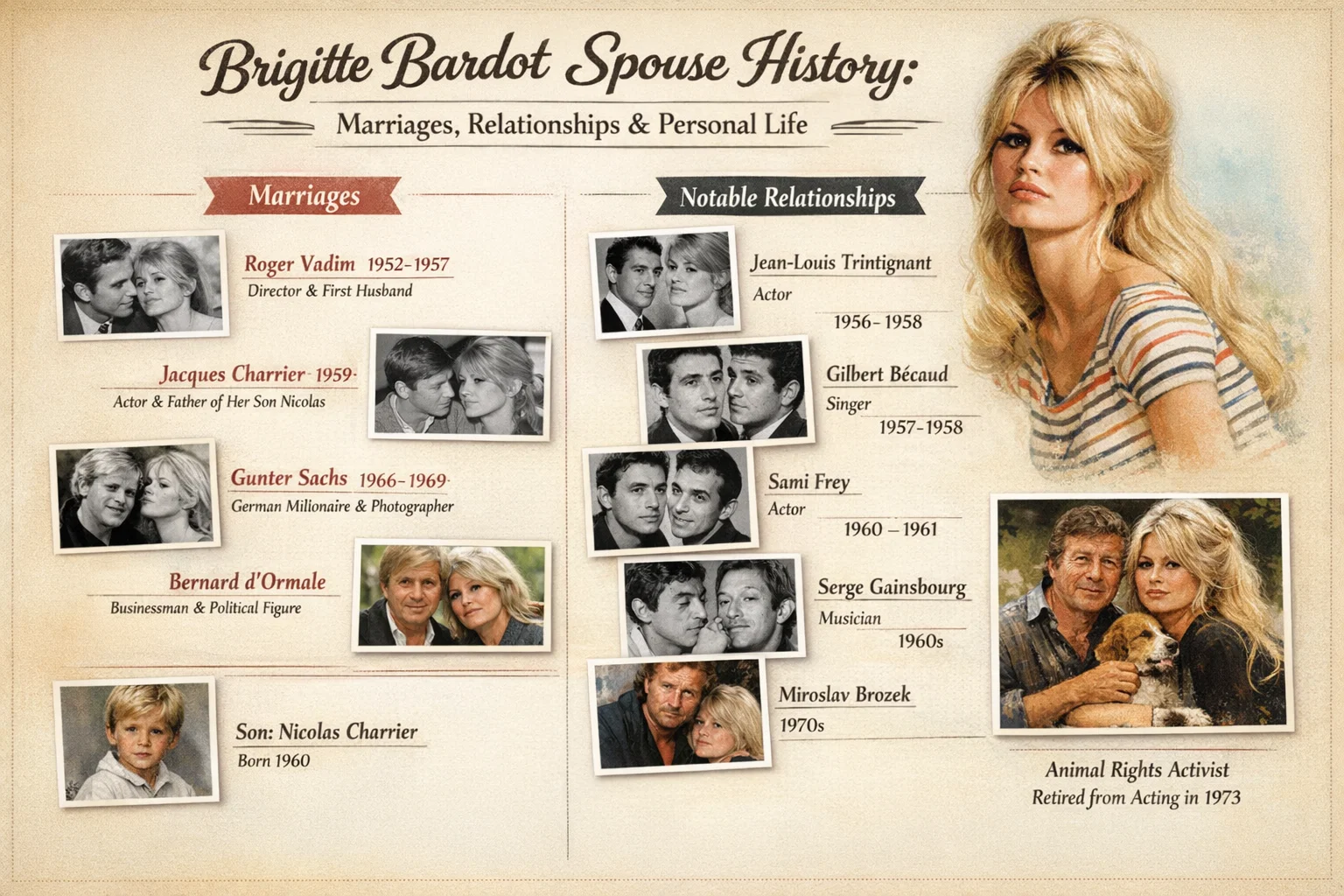
Brigitte Bardot, the iconic French actress and model, began her journey into adult life with a high-profile marriage to filmmaker Roger Vadim. They met when Bardot was still a teenager, and Vadim recognized her extraordinary charm and screen presence. Their relationship quickly developed, and they married in 1952, when Bardot was just 18 years old. This marriage marked the beginning of her life in the spotlight, combining personal romance with professional opportunity.
Roger Vadim was already making waves in French cinema, and his influence was pivotal in launching Bardot’s career. He cast her in several films, most famously And God Created Woman in 1956. The film was a groundbreaking moment in Bardot’s career, cementing her as a global sex symbol. Vadim’s direction and Bardot’s natural charisma created a dynamic duo in French cinema, making their marriage a source of public fascination.
Despite the apparent glamour, their marriage faced difficulties. Bardot’s rising fame, combined with Vadim’s ambitious career and lifestyle differences, created tension. They divorced in 1957 after five years together. Even after their separation, the collaboration between Vadim and Bardot continued to influence French cinema, and their marriage is remembered as a critical early chapter in her life.
Marriage to Jacques Charrier and Motherhood
After her divorce from Roger Vadim, Brigitte Bardot married Jacques Charrier, a French actor, in 1959. This marriage introduced her to the complexities of motherhood and family life. Bardot and Charrier had a son, Nicolas-Jacques Charrier, in January 1960. The birth of her son brought new responsibilities and experiences that Bardot would later reflect on candidly, describing motherhood as both challenging and transformative.
Bardot’s marriage to Charrier represented a different stage of her life. Unlike her first marriage, this union was less tied to her cinematic career and more about domestic life. However, the pressures of celebrity, personal differences, and Bardot’s own desires for freedom contributed to tensions in their relationship. Despite the challenges, Charrier remained an important figure in Bardot’s life during this period.
Their marriage ended in 1962, with Charrier gaining custody of their son. Bardot’s reflections on this marriage revealed her complex feelings about family and her personal identity. She was navigating fame, independence, and motherhood simultaneously, which made this period emotionally intense. The marriage and its end shaped Bardot’s subsequent choices in relationships and personal life.
The Glamorous Union with Gunter Sachs
In 1966, Brigitte Bardot married Gunter Sachs, a wealthy German industrialist and art collector. This marriage brought a new level of glamour and media attention into Bardot’s life. Sachs was known for his extravagant lifestyle, and their relationship was full of publicized displays of affection, including lavish gifts and attention-grabbing gestures.
Their union was brief but intensely scrutinized by the media. The marriage lasted until 1969, only three years, but it highlighted Bardot’s presence as a European social icon. The couple’s lifestyle, including travels, parties, and public appearances, reflected the elite and jet-set culture of the 1960s. The media coverage of their relationship made them one of the most talked-about couples in Europe at the time.
Despite the glamour, differences in lifestyle and expectations caused friction in the marriage. Bardot’s desire for independence and Sachs’ extravagant tendencies made sustained harmony challenging. Their divorce marked the end of her most high-profile and sensationalized romantic chapter, while also solidifying her image as a celebrity whose personal life fascinated the public.
Brigitte Bardot and Bernard d’Ormale: A Lasting Partnership
Brigitte Bardot found enduring companionship in Bernard d’Ormale, whom she married in 1992. Unlike her previous marriages, this union was characterized by stability, loyalty, and shared values. D’Ormale, a businessman and former political adviser, became a key support figure in Bardot’s later life, providing a quieter, less publicized partnership.
Their marriage reflected Bardot’s shift away from the glitz of cinema and the chaos of early fame. Living primarily in Saint-Tropez, Bardot and d’Ormale focused on quieter pursuits, including her lifelong passion for animal rights activism. The couple’s long-lasting marriage lasted until Bardot’s death in 2025, making it the most enduring relationship in her life.
This relationship illustrates a mature phase in Bardot’s life, highlighting her desire for emotional stability and companionship. While her earlier marriages were closely linked with public image and professional advancement, her life with Bernard d’Ormale was grounded in shared experiences and a personal connection. It became the final chapter in her romantic journey.
How Bardot’s Marriages Influenced Her Career
Brigitte Bardot’s romantic life and marriages were closely intertwined with her career. Her first marriage to Roger Vadim directly influenced her rise as a cinematic icon, providing her with leading roles and international attention. Bardot’s persona, both on and off-screen, was shaped by the public’s fascination with her relationships, which contributed to her enduring fame.
Her later marriages, while less tied to professional advancement, also had indirect effects on her career. The attention from her marriage to Gunter Sachs maintained her media presence even as she began to scale back her acting roles. Each relationship reflected the intersection of personal and professional life, showing how Bardot navigated fame alongside private ambitions.
Bardot’s personal life often mirrored broader societal changes, including the shifting perception of women in cinema, public attitudes toward marriage and independence, and the global celebrity culture of the 1960s and 1970s. Through these experiences, her marriages provided lessons in resilience and identity, which she carried into her career choices and public persona.
Reflections on Love, Fame, and Personal Identity
Throughout her life, Brigitte Bardot was candid about her views on love and personal freedom. Her marriages, while high-profile, were also learning experiences that shaped her understanding of relationships and self-identity. Bardot often emphasized the importance of passion, authenticity, and emotional honesty in her personal connections.
Her experiences in love were not without struggle. The challenges of maintaining relationships under public scrutiny, along with her own desires for independence and career fulfillment, influenced her choices and perspective on marriage. Bardot’s reflections offer insight into the tension between personal desires and societal expectations, particularly for women in the public eye.
Ultimately, Bardot’s journey demonstrates how love, fame, and personal identity are interconnected. Each of her marriages contributed to her understanding of herself and her place in the world, revealing a complex and resilient woman navigating life on her own terms. Her story continues to captivate and inspire fans worldwide.
The Legacy of Brigitte Bardot’s Marital Life
Brigitte Bardot’s marriages and relationships remain a significant aspect of her legacy. From the youthful romance with Roger Vadim to the enduring companionship with Bernard d’Ormale, each relationship provides insight into the personal experiences behind her public image. Her life story is a blend of glamour, struggle, and personal growth, making her a multi-dimensional figure in cultural history.
Her legacy extends beyond romance, reflecting the evolution of a woman navigating fame, motherhood, independence, and personal fulfillment. Each marriage represented a different stage in Bardot’s life and contributed to her public persona as both a cultural icon and a private individual with complex emotions.
Even decades after her peak acting years, Bardot’s romantic history continues to be studied, celebrated, and discussed. Her life illustrates how personal relationships can influence public perception, career decisions, and emotional development. Bardot’s marriages remain an essential chapter in understanding the woman behind the legend.
Read More: Nicole Kidman Babygirl: Exploring the Movie, Her Family, and Lasting Impact